Tag Archives: #18thcentury
The windmill
The windmill at Colonial Williamsburg stands as a symbol of human innovation and resilience. It serves as a reminder of the importance of sustainable practices and harnessing renewable energy sources. In an era where environmental consciousness is paramount, the windmill’s legacy inspires us to explore alternative energy solutions and recognize the wisdom of the past.
The windmill at Colonial Williamsburg is more than a static structure; it is a living testament to the ingenuity and resourcefulness of America’s colonial settlers. Its presence adds depth and authenticity to the immersive experience of exploring the historical streets of Williamsburg. As we marvel at its grandeur and learn from its functional beauty, we are reminded that the echoes of the past can guide us towards a brighter, more sustainable future.
The Colonial Capitol
The Raleigh Tavern
Book your tour of Colonial Williamsburg at sandifertours.com
The Charlton Coffee House
The Colonial Capitol
The second capitol building in Williamsburg, Virginia, is a fascinating piece of American history. Built in 1705, it was the center of government for the colony of Virginia during a crucial time in the formation of the United States.
The second capitol building replaced the original building, which had been destroyed in a fire in 1698.
The building was the site of many important events in early American history. The colony of Virginia declared its independence from Great Britain in the building’s House of Burgesses. The building also hosted several important meetings during the American Revolution, including the Virginia Convention of 1776, which adopted the Virginia Declaration of Rights and the state’s first constitution.
The building’s architecture is an interesting blend of English and American styles. The exterior features a brick facade with decorative details that are reminiscent of English Baroque architecture. Inside, the building has a central hall with a vaulted ceiling, which was a common feature in American public buildings of the time.
Today, the second capitol building is part of Colonial Williamsburg, a living history museum that celebrates life in colonial Virginia. Visitors can tour the building and learn about its rich history, as well as the important role it played in the formation of the United States.
Overall, the second capitol building in Williamsburg, Virginia, is a fascinating piece of American history that offers a glimpse into the early days of the United States. Its architecture and historical significance make it a must-see for anyone interested in American history or architecture.
18th Century Punishment
In the 18th century, corporal punishment was a common form of discipline used to maintain order and punish offenders. This type of punishment involved physical pain or discomfort inflicted upon the offender as a means of correction.
One of the most common forms of corporal punishment in the 18th century was flogging. Flogging involved the use of a whip or a rod to strike the offender’s back or buttocks. The number of strokes varied depending on the severity of the offense, with some punishments involving hundreds of lashes.
Another form of corporal punishment was the pillory, which involved locking the offender’s head and hands in a wooden frame in a public place. The offender would be subjected to ridicule and abuse from the public, and sometimes pelted with rotten fruits and vegetables.
Yet another form of punishment was the stocks, which involved locking the offender’s feet and hands in a wooden device in a public place. The offender would be exposed to the elements and subjected to ridicule and abuse from the public.
Corporal punishment was also used in schools to discipline students. It was common for teachers to use a cane to strike the hands or buttocks of students who misbehaved. This form of punishment was intended to instill discipline and obedience in students.
While corporal punishment was viewed as an effective means of maintaining order and discipline in the 18th century, it was also a controversial practice. Critics argued that it was inhumane and violated the offender’s rights. Today, corporal punishment has largely been abolished in many countries around the world, with many viewing it as an outdated and ineffective practice.
Segregation in Williamsburg
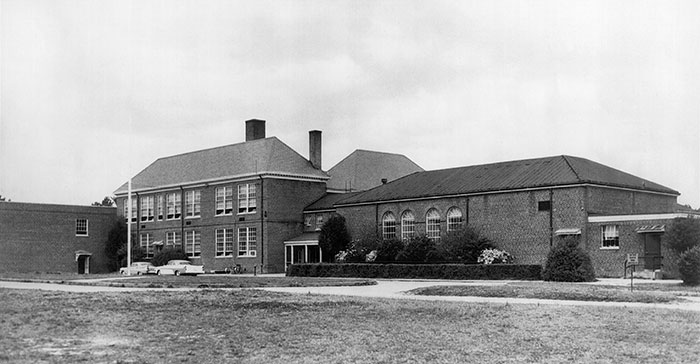
Williamsburg, Virginia, has a complex history of segregation, dating back to the colonial era. Williamsburg served as the colonial capital of Virginia from 1699 until 1780 and played a significant role in the development of slavery in the United States.
During the Jim Crow era, Williamsburg, like many other southern towns, enforced strict segregation laws, which effectively barred African Americans from participating in many aspects of public life. Segregation was not officially abolished until the Civil Rights Act of 1964.
One example of segregation in Williamsburg was the practice of separate schools for African American and white students. This practice continued until the Brown v. Board of Education Supreme Court decision in 1954, which ruled that segregation in public schools was unconstitutional.
Another example was the segregation of public spaces such as parks, restaurants, and theaters. For instance, the city’s largest public park, College Landing Park, was reserved for whites only. African Americans were relegated to smaller, inferior parks.
Despite the legal end of segregation, some forms of segregation still exist in Williamsburg, particularly in housing patterns. A 2017 report by the Equal Justice Initiative found that Williamsburg and James City County had the highest rate of racial segregation of any metropolitan area in the United States.
The report attributed this high level of segregation to several factors, including discriminatory housing policies and a lack of affordable housing options for low-income residents. It noted that African Americans in Williamsburg are concentrated in low-income areas, while white residents tend to live in more affluent neighborhoods.
In recent years, efforts have been made to address this segregation. For example, the Williamsburg-James City County School Board voted in 2019 to redraw school attendance zones in an effort to reduce racial and socioeconomic segregation in the district.
References:
- “A Tale of Two Williamsburgs: One City, Two Races, Three Centuries.” The Virginia Gazette, 20 May 2019, https://www.vagazette.com/news/va-vg-a-tale-of-two-williamsburgs-0522-story.html.
- Equal Justice Initiative. “Segregation in America.” https://eji.org/reports/segregation-in-america/.
Virginia Declaration of Rights Part 2 (Changing the World)
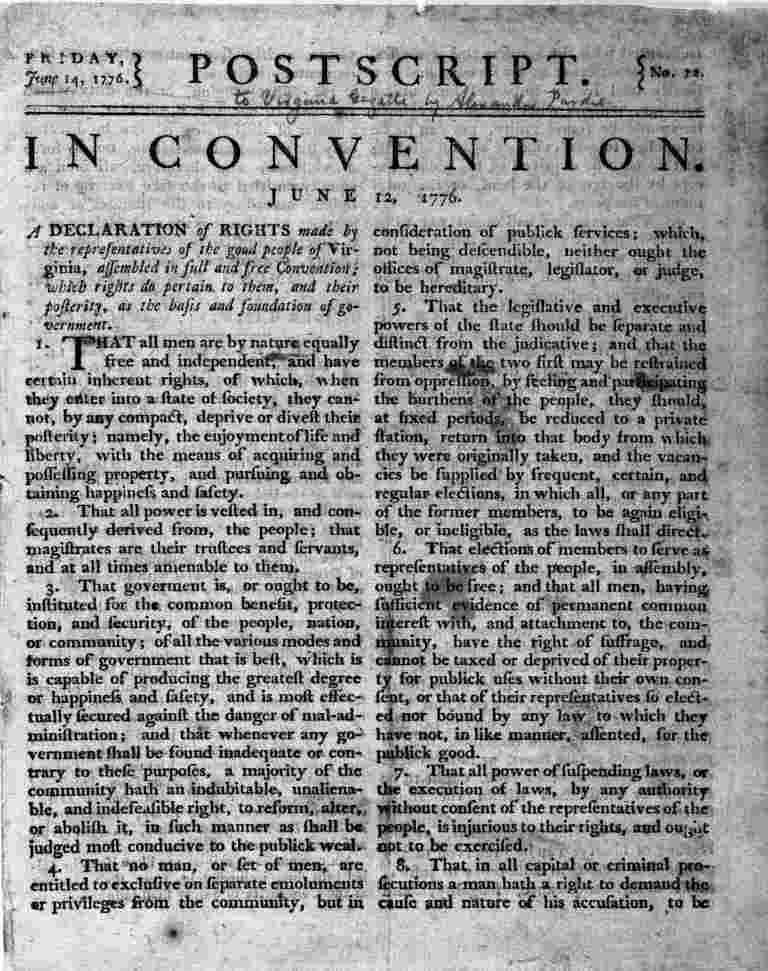
George Mason wrote the Virginia Declaration of Rights in 1776 and the very first line changed the world.
He said “all men are by nature equally free and independent and have certain inherent rights…” and then lists them. There was a big problem with that first line. In Virginia we had slavery. That was Virginia’s problem but there was a much larger global issue at work.
In the 18th century it was an established fact that all men are NOT equal. The idea had been around for awhile but no government would ever put something that progressive or that radical into practice. The men of Virginia couldn’t do it either. They changed it. If you live in Virginia this is the way it still reads to this day, “all men are by nature equally free and independent and have certain inherent rights… when they enter into a state of society”.
That’s a nice little legal loophole. They got to be equally free and independent but they got to keep their enslaved because the only ones “in society” were free, white, adult, male, protestant, land owners.
Their change did not stop Jefferson from copying it into the Declaration of Independence. All men are created equal. That didn’t make us equal. It put us on a path to equality. A path we are still on because we never quite achieved equality.
BUT we did change the world. Go anywhere in the world today and challenge them with the idea “all men are created equal”. They will not disagree with you. We changed the way the word thinks and it all started in Virginia.
The Virginia Declaration of Rights (part 1)
In May of 1776 the 5th Virginia convention met at the capitol building.
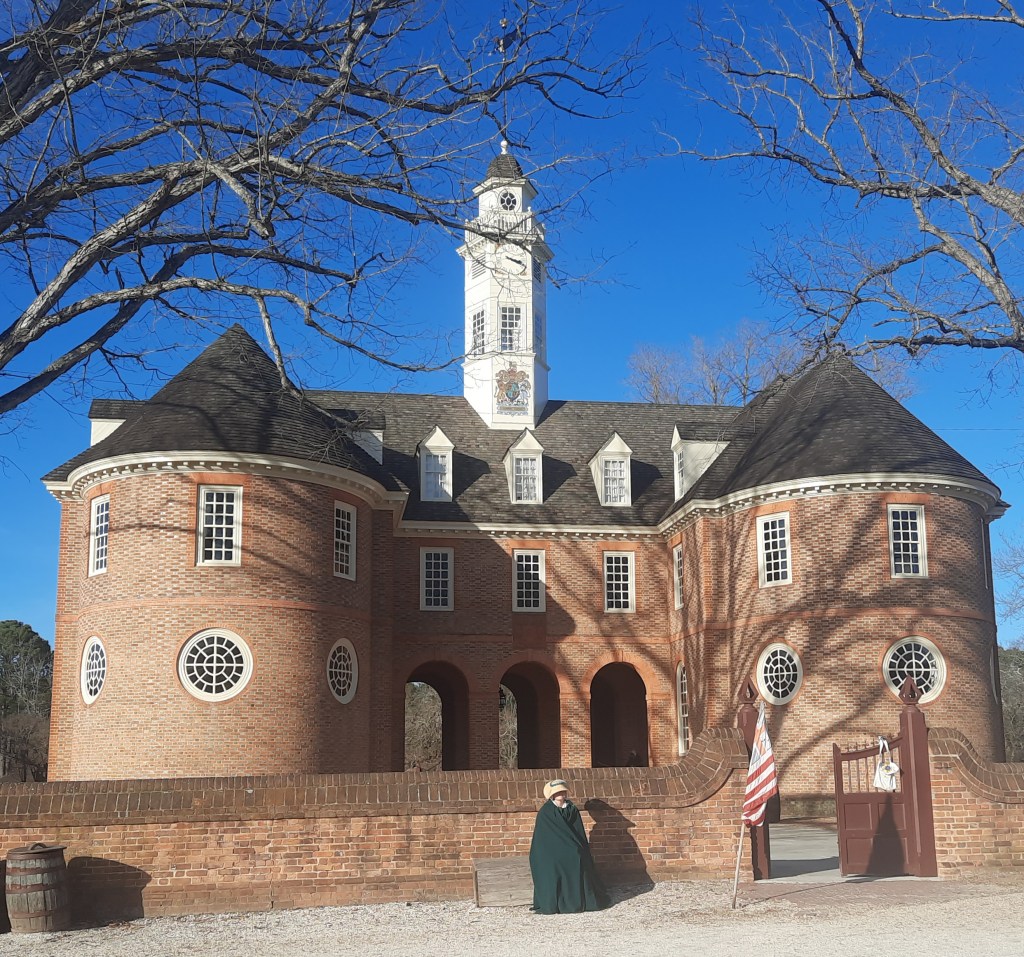
They voted to declare independence from Great Britton. Then immediately realized that you can’t just declare yourself independent. You would leave Virginia without a government. So the first order of business… create a new government. None of them had ever created a government before so when they created the government of Virginia…. they did it wrong.
They actually thought the best way to form a government was to define the rights of the citizens and then form a government to protect those rights. It’s a great idea but that’s not how governments are formed.
Governments are traditionally formed the other way around (like our federal government) When a small group of men seize power (in Philadelphia). Those men form a government (create a constitution) then tell the citizens what rights they will allow them to have (begrudgingly add the bill of rights).
But in Virginia they decided on the rights of citizens first and then formed a government that answers to the people.
It instilled in the new nation the idea that the Government’s main function is to protect the rights of it’s citizens.
 Lonnie Sandifer tour guide