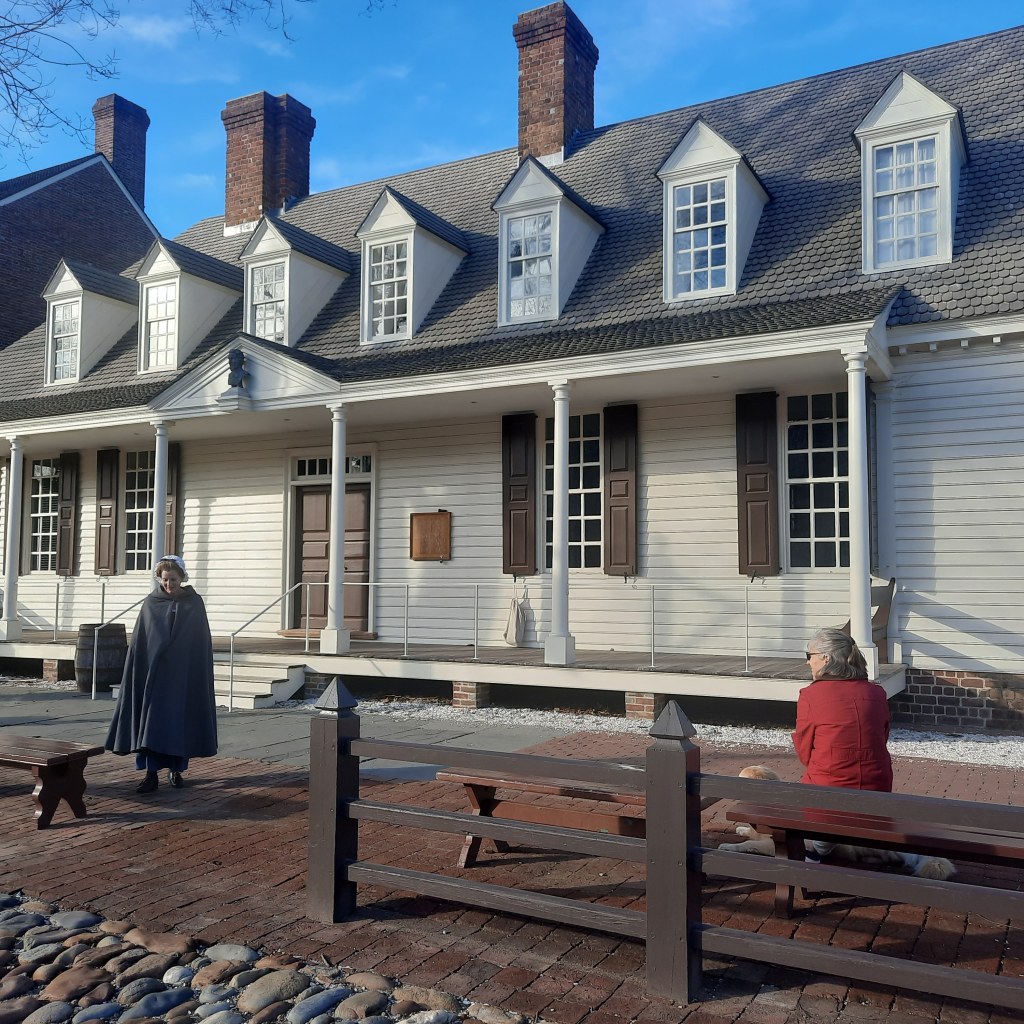
The rebuilt Raleigh tavern. One of the most under rated buildings in American history.
In March of 1773 the Virginia committee of correspondence was formed to “consist of eleven persons, to wit: the Honourable Peyton Randolph, Esquire; Robert Carter Nicholas, Richard Bland, Richard Henry Lee, Benjamin Harrison, Edmund Pendleton, Patrick Henry, Dudley Digges, Dabney Carr, Archibald Cary, and Thomas Jefferson, Esquires, any six of whom to be a committee, whose business it shall be to obtain the most early and authentic intelligence of all such Acts and resolutions of the British Parliament, or proceedings of administration, as may relate to or affect the British colonies in America”. A spy ring. Any six of them would constitute a meeting of the committee. The committee met in the Daphne room of the Raleigh tavern.
James Southall was the owner of the tavern and a sympathizer for the rebellious cause. He later became the leader of one of the committees of public safety ( more about the committees of safety in future articles).
In 1774 the Virginia house of burgessess met in the Apolo room. They called for the first contental congress (like it or not the idea of our government meeting in congress started in the Raleigh tavern).
In 1776 the 5th Virginia convention met. George Mason stayed at the Raleigh tavern. From his room at the tavern he wrote the Virginia declaration of rights (more about the declaration of rights and the forming of the Virginia government in future articles). His declaration of rights would be adapted by the contental congress to become the bill of rights attached to the constitution.
The Raleigh tavern was the first building opened to the public at Colonial Williamsburg. Two years before any other. But NOT because of its historical importance but because of its sentimental importance. In 1776 the phi beta kappa fraternity was formed here. W.A.R. Goodwin (the man who had the idea for Colonial Williamsburg) and Rockefeller (the money behind Colonial Williamsburg) were both phi beta kappa alumni .
 Lonnie Sandifer tour guide